
- Your cart is empty
- Continue Shopping

How to Talk with Your Partner About Sexual Health – Communication Tips


Talking about sexual health can feel awkward at first, even in intimate relationships. A lot of people avoid these conversations for fear of being judged, rejected, or just being awkward. But steering clear of the subject often results in confusion, distance, and misunderstandings over time.
Healthy communication helps couples feel more connected, safe, and confident. A simple and honest sexual health chat can improve trust, emotional closeness, and overall relationship quality.
Sexual health is not only about intimacy. It also includes emotional comfort, physical well-being, boundaries, and understanding each other’s needs. Learning how to talk openly can make relationships stronger and less stressful.
Why Sexual Health Conversations Matter
Many couples only discuss sexual health when there is a problem. In reality, open communication should happen before issues appear.
Strong communication in relationships helps couples avoid misunderstandings and build emotional security. It becomes easier to discuss protection, comfort, testing, or changes in desire when regular communication already exists.
Honest conversations also support Sexual wellness for couples, especially when both partners feel heard and respected.
Being open with one another can make being intimate with each other more relaxed and emotionally connected.
Choosing the Right Time to Talk
Timing matters. Serious conversations should not happen during arguments, stress, or rushed moments.
Choose a calm and private setting where both people feel comfortable. This creates space for honest discussion without pressure.
A relaxed conversation supports Stress-free sexual health planning because both partners can speak openly without feeling defensive.
The goal is not to blame or criticize. The goal is understanding and support.
Starting the Conversation Naturally
Many people overthink how to begin. The best approach is simple and respectful.
You can start by sharing your own thoughts first instead of making demands. For example, talking about health, comfort, or plans feels less intimidating.
Learning how to talk to a partner about sexual needs becomes easier when you focus on openness instead of perfection.
Small conversations are often better than one long and intense discussion.
Talking About Testing and Protection
Discussing testing can feel sensitive, especially in new relationships. But honesty protects both partners.
Understanding how to ask a partner to get tested is important for mutual safety. Instead of sounding suspicious, approach it as something both partners can do together.
This conversation may also include topics like protection, fertility, and contraception, or past sexual health history. Open discussion creates trust instead of fear.
Building Trust Through Honest Communication
Trust grows when both people feel emotionally safe.
Learning how to build trust and intimacy in a relationship takes time, consistency, and understanding. Listening without judgment is one of the most important parts.
Partners should feel comfortable discussing concerns, insecurities, or emotional needs without fear of criticism.
This kind of honesty also supports improving transparency in dating, especially in newer relationships.
Understanding Boundaries and Comfort
Every person has different comfort levels. Respecting those limits is an important part of intimacy.
Healthy boundaries in relationships help both partners feel secure and respected. Boundaries are not rejection—they are part of emotional safety.
Talking about physical comfort, emotional readiness, and personal preferences improves connection over time.
This is also part of Communicating physical needs, which helps avoid misunderstandings and pressure.
Handling Sensitive Topics Carefully
Some topics may feel harder to discuss, especially performance concerns or emotional struggles.
For example, people often avoid conversations about performance anxiety because they fear embarrassment. However, silence usually increases stress.
Similarly, learning how to talk about premature ejaculation requires patience and kindness. Blame or jokes can damage confidence, while support helps reduce pressure.
The way you speak matters as much as what you say.
When Physical Discomfort Affects Intimacy
Physical discomfort can create emotional distance if ignored.
Understanding what to do about painful sex starts with honest communication. Many people stay silent because they feel ashamed or worried.
Discussing discomfort early helps couples find solutions together rather than avoiding intimacy altogether.
Supportive communication reduces stress and creates understanding.
Talking About Emotional and Past Experiences
Past experiences can affect present relationships. Some people may carry emotional pain or difficult memories into new relationships.
Learning how to deal with past sexual trauma requires patience, trust, and emotional support. These conversations should never feel forced.
Giving your partner space, listening carefully, and respecting emotional boundaries can help healing happen naturally.
Compassion is more important than finding quick answers.
Sexual Health During Different Life Stages
Sexual health changes over time. Couples may experience changes after childbirth, with age, or during stressful periods.
Topics like postpartum intimacy are important because physical and emotional changes can affect closeness after pregnancy.
Similarly, sexual health over 50 may include changes in energy, comfort, or hormone levels.
Discussions about hormone balance and energy help couples understand that these changes are normal and manageable.
Lifestyle and Emotional Health Matter Too
Sexual health is connected to everyday life.
Poor sleep, stress, and emotional pressure can reduce energy and intimacy. The connection between Sleep, stress, and vitality is stronger than many people realise.
Stress at work, financial pressure, or emotional exhaustion can affect desire and communication.
Supporting each other emotionally improves both relationship quality and physical connection.
Identifying Problems Early
Ignoring small issues often leads to bigger relationship struggles later.
Learning about identifying warning signs early helps couples address problems before they grow. This may include emotional distance, reduced communication, discomfort, or ongoing frustration.
Early conversations create solutions before resentment builds.
Simple Communication Tips That Help
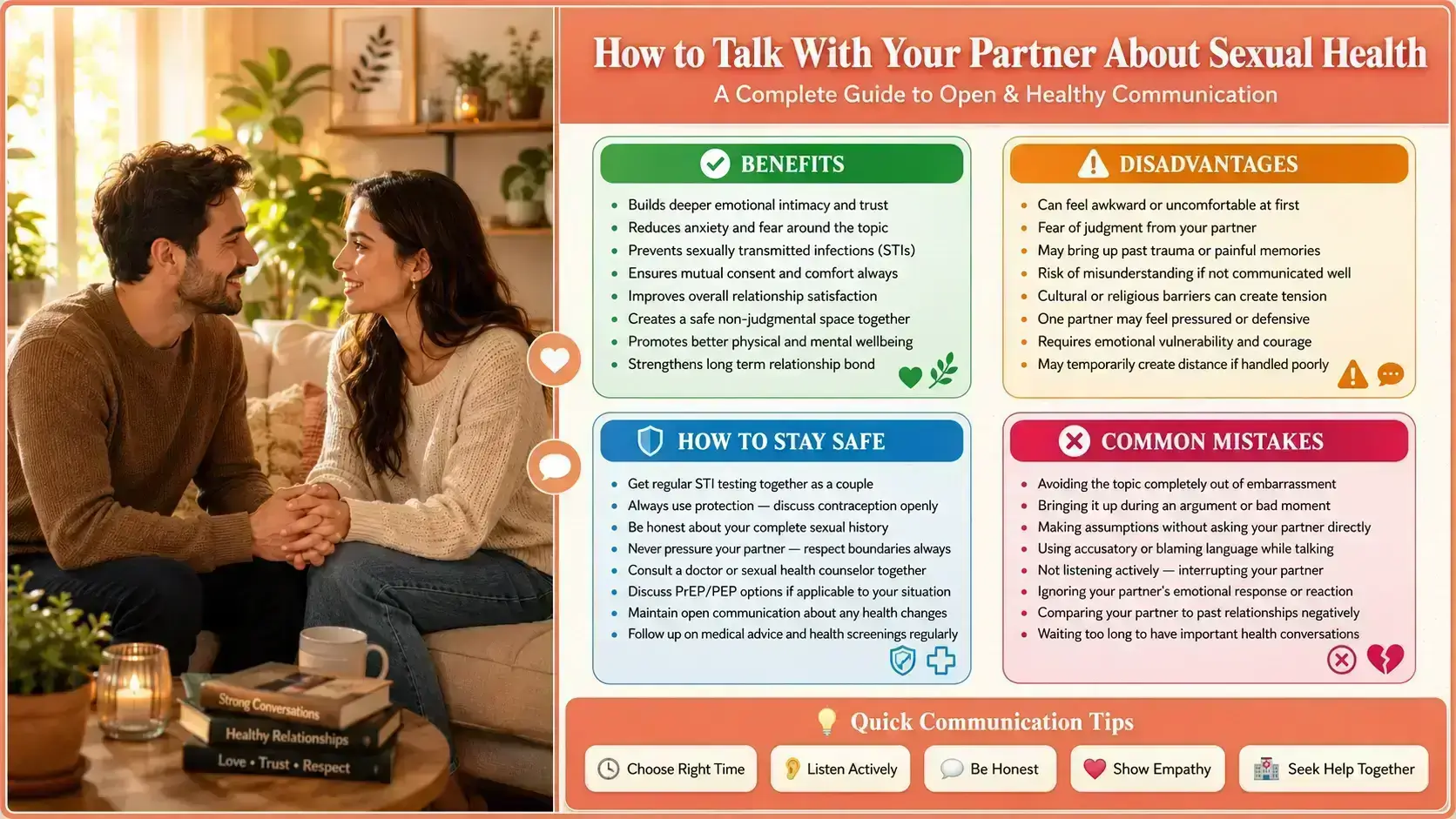
Healthy communication does not need complicated words. Small habits make a big difference:
- Listen fully before reacting.
- Avoid blame or criticism.
- Speak honestly but kindly.
- Respect emotional boundaries.
- Stay calm during difficult discussions.
These habits improve comfort and trust over time.
Final Thoughts
Talking openly about sexual health strengthens both emotional and physical connections. A simple sexual health chat can improve trust, comfort, and relationship satisfaction.
Strong communication in relationships, understanding boundaries in relationships, and learning how to talk to a partner about sexual needs help couples feel more connected and secure.
Whether discussing fertility and contraception, performance anxiety, or what to do about painful sex, honest communication creates healthier relationships.
Supporting each other through changes like postpartum intimacy, emotional stress, or sexual health over 50 helps intimacy grow naturally over time.
The more openly couples communicate, the easier it becomes to build trust, reduce fear, and create a healthier relationship together.


