- Your cart is empty
- Continue Shopping

Everything About Genital Herpes: Symptoms, Treatment, and Prevention

Genital herpes is a common viral infection that many people have but do not always talk about. It can affect both men and women and is usually spread through skin-to-skin contact during intimacy. Even though it stays in the body for life, it can be managed well with the right care and awareness.
Many people feel confused or worried when they first notice symptoms. Questions like how to identify genital herpes or whether it is something serious are very common. The truth is, with proper understanding, treatment, and lifestyle care, people can lead a normal, healthy life.
This guide explains everything you need to know simply and clearly.
What is Genital Herpes?
Genital herpes is caused by the herpes simplex virus (HSV). There are two main types, often referred to as genital herpes, different types — HSV-1 and HSV-2.
HSV-1 is usually linked with cold sores around the mouth, but it can also affect the genital area through oral contact. HSV-2 mainly spreads through sexual contact and is the most common cause of genital infections.
Many people also ask how common genital herpes is in the UK. It is more common than most think, especially among sexually active adults. In many cases, people may carry the virus without knowing it.
How to Identify Genital Herpes
Understanding how to identify genital herpes early can help you manage it better. The first outbreak is often the most noticeable.
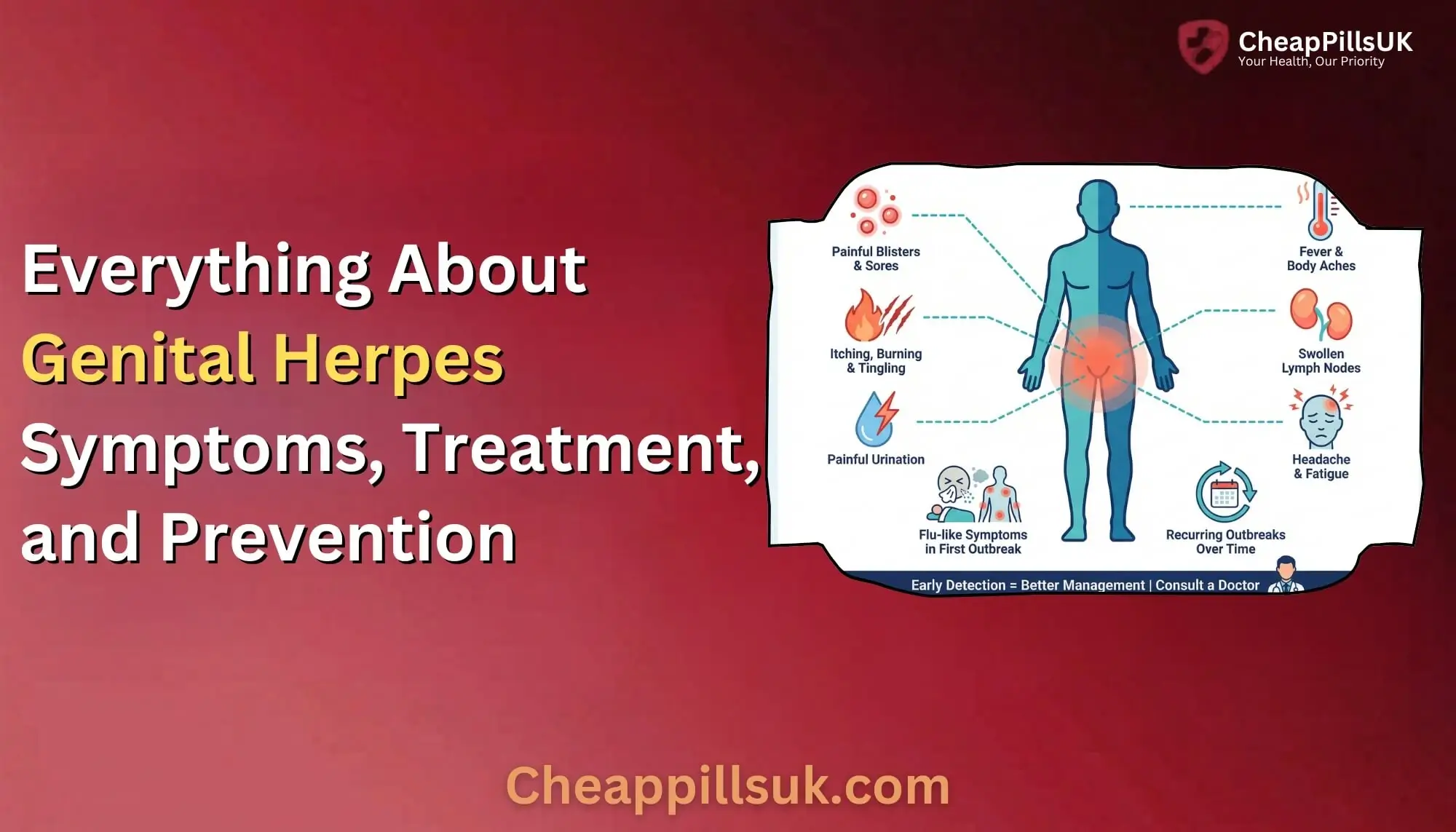
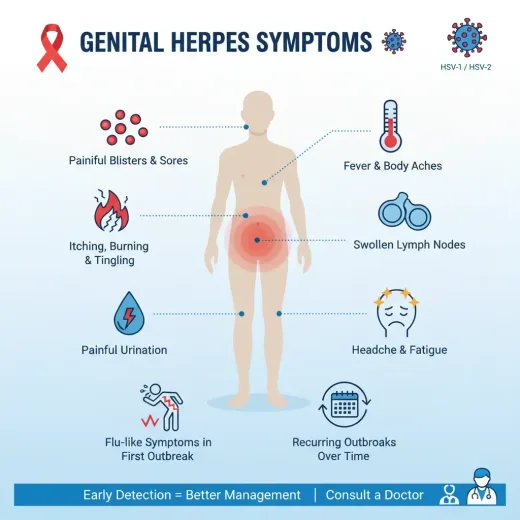
Common genital herpes sore symptoms include small blisters or sores around the genital or anal area. These sores may break open, causing pain or discomfort.
Other signs include itching, burning, or tingling sensations before the sores appear. Some people also experience flu-like symptoms such as fever or body aches during the first outbreak.
In men, symptoms may appear as herpes in genital area male, including sores on the penis or nearby skin. In women, herpes on genital area women may include sores around the vagina, cervix, or outer skin.
What Can Be Mistaken for Genital Herpes
Many skin conditions look similar, which is why people often ask what can be mistaken for genital herpes.
Razor burns, ingrown hairs, yeast infections, or allergic reactions can sometimes look like herpes. However, herpes sores usually follow a pattern of blistering, breaking, and healing.
If you are unsure, it is always better to get checked instead of guessing.
Understanding Herpes Outbreaks
A herpes outbreak happens when the virus becomes active and causes symptoms. The first outbreak is usually the strongest, while later ones are often milder.
Outbreaks can be triggered by stress, illness, weak immunity, or fatigue. Some people may experience frequent outbreaks, while others may have very few over time.
Recognising early signs like tingling or itching can help you manage outbreaks quickly.
Diagnosis and Testing
Doctors can diagnose herpes by checking the sores or taking a sample. Some people also ask, can herpes be diagnosed with a blood test?
Yes, blood tests can detect the virus, even if there are no visible symptoms. Many people in the UK use herpes blood test UK services for confirmation.
Testing helps you understand your condition and take proper steps to manage it.
Treatment Options for Genital Herpes
There is no permanent cure, but treatment can control symptoms and reduce outbreaks.
Common medications for herpes includes antiviral drugs that help the body fight the virus. One widely used option is valacyclovir, which reduces pain, speeds up healing, and lowers the chance of spreading the virus.
People looking to buy genital herpes treatments online should always choose trusted platforms to ensure safety and quality.
Treatment can be taken during outbreaks or daily for long-term control, depending on the condition.
Home Care and Natural Support
Many people explore home remedies for genital herpes to manage symptoms naturally. While these do not cure the virus, they can provide relief.
Keeping the area clean and dry, wearing loose clothing, and avoiding irritation can help sores heal faster.
Cold compresses or soothing baths may reduce discomfort. Rest and hydration also support recovery during outbreaks.
Diet and Its Impact on Herpes
Diet plays a role in managing outbreaks. Some foods support the immune system, while others may trigger symptoms.
People often search for foods good for genital herpes. These include fruits, vegetables, whole grains, and foods rich in vitamins.
On the other hand, foods bad for genital herpes may include processed foods, high sugar items, or anything that weakens immunity.
A balanced diet helps the body control the virus more effectively.
Prevention and Reducing Risk
Learning how to prevent herpes is important, especially for those who are sexually active.
Using protection during intimacy reduces the risk, but it does not completely remove it, as the virus spreads through skin contact.
Avoiding intimacy during outbreaks is one of the best ways to prevent transmission. Open communication with your partner also plays a key role.
Understanding symptoms early and taking treatment helps lower the chances of spreading the virus.
Genital Herpes at Different Ages
Genital herpes can affect people at any age. Some people even experience genital herpes after 60.
In older adults, symptoms may be milder but still require attention. A strong immune system helps control the virus better at any age.
Awareness and care remain important throughout life.
Oral Herpes and Its Link
Some people also experience signs of oral herpes, such as cold sores around the mouth.
Oral herpes can spread to the genital area through oral contact. This is why understanding both types is important for prevention.
Taking precautions during active symptoms reduces the risk of spreading the virus.
Living with Genital Herpes
Living with herpes may feel stressful at first, but it becomes manageable with time. Many people lead normal relationships and healthy lives.
The key is awareness, treatment, and self-care. Understanding your triggers and taking timely action can reduce outbreaks.
Emotional support is also important. Talking to a trusted partner or healthcare provider can help reduce anxiety.
Final Thoughts
Genital herpes is a common condition, and understanding it makes a big difference. From learning how to identify genital herpes to managing a herpes outbreak, awareness helps you stay in control.
With proper medication for herpes, options like valacyclovir, and simple lifestyle care, symptoms can be managed effectively. Knowing about foods good for genital herpes and avoiding foods bad for genital herpes also supports better health.
Testing options like herpes blood test uk and understanding can herpes be diagnosed with a blood test can give clarity and peace of mind.
Most importantly, learning how to prevent herpes and taking the right steps helps protect both you and your partner. With the right approach, living with herpes becomes easier and less stressful over time.